
Guides
ShipBob Competitors: 10 Reliable Alternatives for Growing Ecommerce Brands
TL;DR
ShipBob is a reliable ecommerce fulfillment platform, but depending on your needs such as pricing clarity, faster SLAs, Shopify integrations, or global reach, providers like Bezos.ai, ShipMonk, Deliverr, ShipStation Fulfillment, Red Stag, or Easyship may be a better fit.
Our team decided to put together a clear breakdown of the top ShipBob alternatives for growing ecommerce brands. Explore the list to see which fulfillment partner offers the right mix of pricing, features, and scalability for your business.
Ready to scale? Explore how Bezos simplifies your fulfilment!
Key takeaways
- ShipBob operates a global network of more than 45 fulfillment centres across the United States, Canada, Europe, and Australia.
- In 2025 ShipBob reported a 40 percent year-over-year increase in orders fulfilled during the peak season from Thanksgiving to Cyber Monday, marking their largest peak season to date.
- ShipBob has processed more than 200 million orders with a reported 99.97% fulfillment accuracy and a 99.6% on-time delivery rate.
- Although the numbers look impressive, the reason why ecommerce brands search for alternatives is primarily due to high or unexpected costs, poor customer service, and operational errors like lost inventory or delayed shipments.
- Brands with oversized or heavy products often look for alternatives because ShipBob’s model is optimized for small to medium parcels.
- One of the recent complaints about Shipbob stated ShipBob is onboarding small brands that ship as few as 50 to 100 orders per month, even though these accounts are unprofitable and drive most of the negative reviews and churn.
Why ecommerce brands look for ShipBob alternatives
Overall, ShipBob holds a 4.2 rating on TrustPilot, from 911 reviews.
Their sentiment is positive and customers praise the fact that they are super responsive to their comments.
However, even satisfied users sometimes decide to switch providers. Common reasons include the need for clearer pricing, stronger SLA consistency during peak periods, more flexible workflows for complex SKUs, or better international coverage as their brand expands.
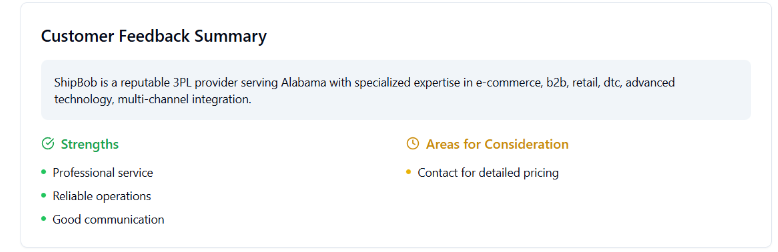
Customer feedback is summarised from ecommercejolt.com, and there is also an ongoing Reddit discussion that has continued for several years, offering a mix of positive experiences and concerns from different users.
Reddit feedback suggests that while ShipBob offers strong technology, integrations and fulfillment infrastructure, several brands, especially those with non-standard SKUs, or those sensitive to cost predictability, report issues.
ShipBob key patterns: cost-surprises (especially around dimensional weight and packaging), inventory or shipping mishaps, and variable customer support/exit processes.
ShipBob’s most common bottleneck mentioned across the reviews online is SLA consistency.
Merchants claim they experience delayed receiving, slower processing on busy days, or unexpected turnaround times.
Another point is pricing clarity. ShipBob is not the only 3PL with variable fees, but some businesses want more predictable monthly costs.
When you add storage, pick and pack, packaging, and seasonal adjustments, it can feel harder to forecast the real fulfillment spend.
Some of the latest Shipbob reviews share this sentiment, mentioning some instances of fulfillment being almost double.
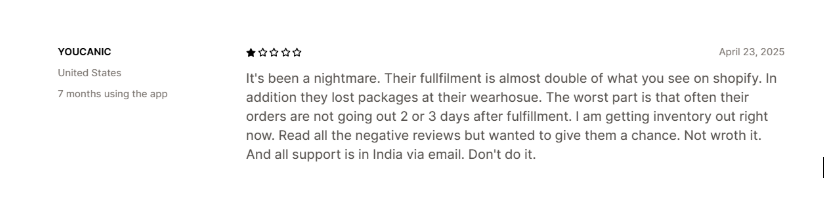
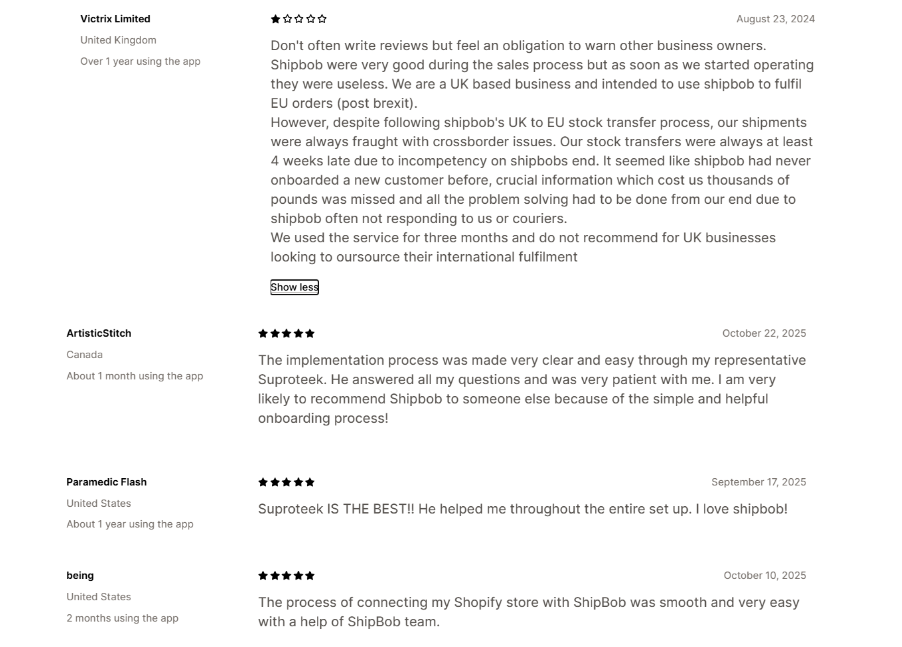
Brands that sell oversized or heavy items usually look elsewhere, as we can see that it was discussed on Reddit as well. ShipBob focuses on small to medium parcels, so bulky goods become expensive to store and ship.
Many founders with furniture, fitness gear, or heavier equipment turn to niche 3PLs that specialize in large items.
Comparison table: ShipBob vs top competitors
Now let’s see a detailed comparison:
What to look for in a ShipBob alternative
Choosing the right ShipBob competitor depends on your needs today and what you’ll require as orders grow. Small details like shipping speed, support quality, and integrations directly shape how customers experience your brand.
- Affordability for small businesses → simple pricing + low minimums → ensures you avoid surprise fees and can scale without high upfront commitments.
- Pick-pack and storage transparency → clear base fees + predictable monthly costs → helps you maintain margins and forecast spend accurately.
- Core fulfilment performance → fast receiving + accurate pick-and-pack → reduces delays and prevents customer complaints.
- Returns and workflow handling → smooth returns + support for kits/bundles → keeps operations efficient if you sell subscription or multi-unit products.
- Integrations with Shopify and Amazon → Shopify-native workflows + Amazon SFP support → reduces manual work and keeps orders synced correctly.
- Marketplace compatibility → stable integrations across major channels → prevents errors when selling multichannel.
- Tracking and delivery reliability → stable SLAs + proactive delay alerts → improves customer trust and reduces “Where is my order?” tickets.
- Clear tracking updates → real-time visibility + accurate scans → helps your support team resolve issues faster.
- International fulfilment capability → multi-region warehouses + customs expertise → shortens cross-border delivery times and lowers duties issues.
- Global carrier coverage → regional routing + discounted rates → keeps international shipping competitive.
- Multi-node fulfilment → ability to split stock + automatic routing → speeds up delivery and reduces shipping costs in domestic and international markets.
- Scalability → easy to add new centres as you grow → prevents the need to switch 3PLs later.
- Impact on customer experience → good packaging + on-time delivery → boosts repeat purchase rates.
- Easy returns → simple returns workflow + clear communication → increases customer satisfaction and lifetime value.
Discover smarter ecommerce warehousing with Bezos.ai
Best ShipBob competitors to explore in 2026
What are the top-rated alternatives to ShipBob for ecommerce order fulfillment with transparent pricing and reliable shipping times?
Bezos.ai
Who it is best for
Bezos.ai is a strong fit for small and mid-sized ecommerce brands that want predictable pricing, smooth multichannel integrations, and a fulfillment partner built for international growth. It works well for teams that need regional warehouses, reliable customs handling, fast SLAs across multiple countries, and clear visibility into orders and inventory. It’s also ideal for sellers who value proactive issue resolution, dedicated account management, and a setup that scales without adding operational complexity.
On the other hand, Bezos.ai is not the best fit for brands that rely heavily on complex B2B logistics, highly customised packaging workflows, or enterprise-level supply chain systems that require deep, bespoke integrations.
It may also feel less suitable for very early hobby-stage sellers with extremely low order volume, and some merchants prefer providers with more public pricing data or a longer track record in the US market.
Core features
Bezos.ai connects over 30 sales channels and marketplaces to a network of around 63 fulfillment centers in 16 countries, including the UK, EU, US, Canada, Australia, and UAE. Orders sync automatically from Shopify, Amazon, and other platforms and are tracked from storefront to delivery in one dashboard.
Pricing overview
Bezos.ai uses a transparent, quote-based model that groups storage, pick and pack, and green shipping into predictable fees for SMBs.
It positions itself as more affordable than many traditional 3PLs for smaller and mid-sized brands, while still offering discounted carrier rates.
Bezos.ai is the reasonable ShipBob alternative for 2026 for small and mid-sized brands that want automation, SLAs, and transparent costs that scale with them.
When it comes to prices, Bezos.ai often stands out in that comparison because it focuses on predictable fees and SLA-backed service rather than just warehouse count.
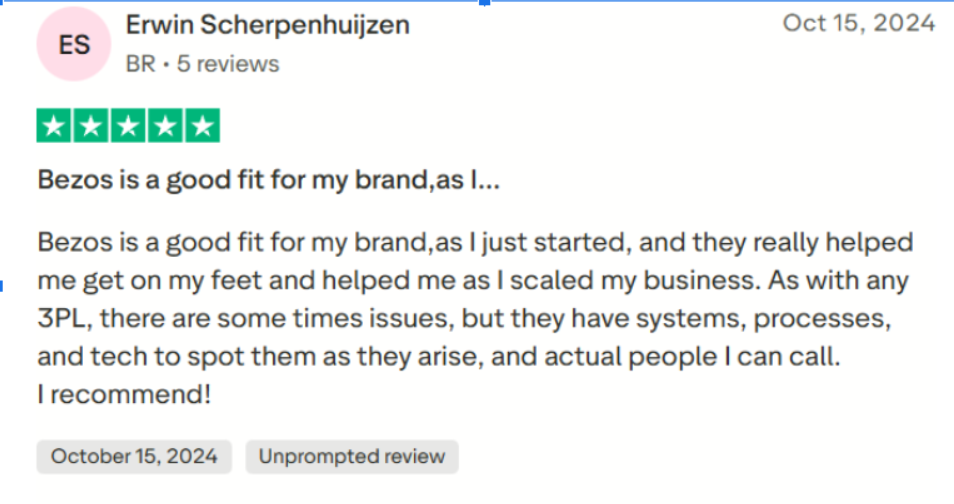
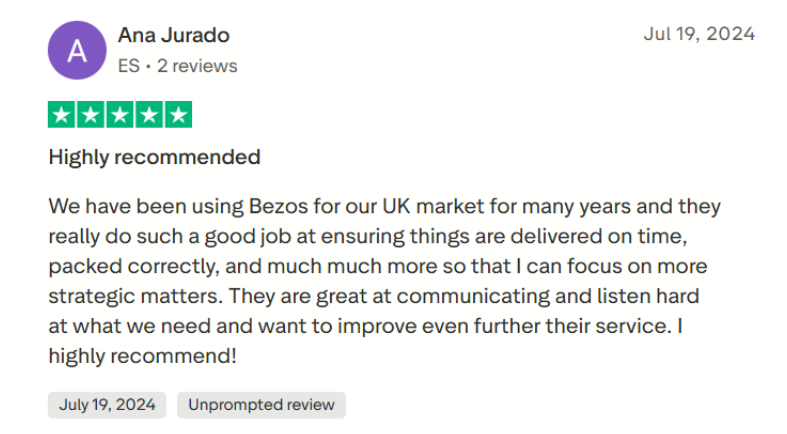
Reviews
ShipMonk
Who it is best for
ShipMonk is a strong fit for DTC and subscription-based brands because it supports multichannel selling across platforms like Shopify, Amazon, and Walmart, offers real-time inventory visibility, and handles complex workflows such as kits, bundles, and subscription packaging.
Its Virtual Carrier Network helps optimise shipping rates as order volume grows, and its infrastructure scales well as brands expand.
However, ShipMonk may feel pricey for very small brands, its tiered pricing can get complex to predict, and some merchants note that costs rise quickly at low volumes. Custom packaging or specialised workflows may add extra fees, and because support quality varies by account manager, the experience is not always consistent across all clients.
Core features
ShipMonk offers ecommerce, subscription box, retail, and FBA prep fulfillment across multiple US and international warehouses. Its Virtual Carrier Network uses multiple carriers to find cheaper and faster routes. The platform connects to major ecommerce tools and marketplaces, giving merchants real-time inventory and order views.
Pricing overview
ShipMonk uses tiered pricing based on monthly order volume, storage, and service complexity. Per-order pick and pack fees decrease as volume rises. Exact numbers are not public by default and are usually provided by quote.
ShipMonk shines when you need one partner to handle DTC, subscription, and wholesale orders on the same backbone.
Deliverr (via Shopify / Flexport)
Deliverr is a particularly strong option for ecommerce brands that sell heavily through Shopify and other major marketplaces and aim to offer fast 1- or 2-day (or even next-day) delivery to boost conversion and competitiveness. Its wide U.S. footprint, support for fast shipping tags, and integrations make it well suited for merchants prioritizing speed in domestic fulfilment.
Users praise the fast shipping options, transparent cost-estimating tools, and simplified fulfilment workflows.
On the flip side, Deliverr may be less suitable for brands that require high levels of branding control, custom packaging, returns handling, or international shipping ,some reviews point out that service quality can vary because fulfillment is delivered via third-party warehouses, and smaller or niche brands may find the cost-benefit less compelling.
Core features
Deliverr, now part of Flexport and closely tied to Shopify’s fulfillment offering, supports ultra-fast shipping for orders coming from Shopify, Amazon, Walmart, and other channels. It uses demand forecasting and smart inventory placement to position stock closer to customers and power fast delivery badges.
Pricing overview
Historically, Deliverr used clear SKU-based and zone-based pricing for storage and fulfillment, with pay-as-you-go style fees. Under Flexport and Shopify, merchants still receive simple, volume-based quotes with a focus on predictable costs for fast shipping.
Deliverr, now under Flexport and Shopify, is ideal when delivery speed and checkout conversion are your biggest levers.
ShipStation Fulfillment
Who it is best for
ShipStation Fulfillment is well suited for merchants who still manage part of their fulfillment in-house but want stronger shipping automation, easier label creation, and smarter carrier management without immediately committing to a full 3PL transition. It works especially well for sellers already using
ShipStation’s software, since the workflow stays familiar while partner warehouses can take over picking and packing as needed.
Users appreciate the flexibility, broad carrier options, and the ability to run hybrid operations. However, the experience can vary significantly depending on which partner 3PL handles the physical fulfillment, meaning consistency isn’t guaranteed.
Some merchants also note that costs can rise with higher shipment volumes or add-ons, and that ShipStation isn’t a full end-to-end 3PL solution, so brands needing deep customization or heavy operational support may outgrow it.
Core features
ShipStation was built as shipping and label management software rather than a classic 3PL. It offers multi-carrier rate shopping, automated shipping rules, batching, and tracking notifications. Some merchants pair ShipStation with partner warehouses to handle pick and pack under the “ShipStation Fulfillment” umbrella.
Pricing overview
Pricing is subscription-based for the software, with tiers determined by shipment volume and features. Fulfillment and warehousing charges are handled through linked 3PL partners and are quoted separately.
ShipStation Fulfillment works best when you want ShipBob-level shipping automation but still prefer to keep your own warehouse or chosen 3PL partners.
Red Stag Fulfillment
Who it is best for
Red Stag Fulfillment stands out for ecommerce brands shipping heavy, oversized, fragile, or high-value items, thanks to its high accuracy guarantees, specialized handling processes and tailored infrastructure. For example, many reviews highlight that Red Stag delivers “industry-low error rate” and “excellent operational transparency” when dealing with large or difficult SKUs.
Its warehouse operations are optimized for bulky items-custom-fitted boxes, heavy-duty packaging, and staff trained for high-value shipments are all emphasized.
This makes it a particularly strong fit for brands selling furniture, fitness equipment, large electronics or any product where damage or error is very costly. On the downside, Red Stag is less suited for smaller, lightweight goods where its pricing and operational model may not deliver optimal cost-efficiency-reviews note that its software interface could be less intuitive, its warehouse footprint is smaller (primarily U.S. only) and onboarding may require higher minimums or a stronger operational baseline.
Core features
Red Stag specializes in big, heavy, or oversized goods, like furniture, gym equipment, and large electronics. It runs fulfillment centers in Tennessee and Utah, strategically placed to cover US shipping zones with fast ground timelines. It also offers strong accuracy guarantees and is frequently rated as a top 3PL for heavy products.
Pricing overview
Red Stag uses custom quotes based on product size, weight, and order volume. It negotiates strong carrier discounts for heavy parcels, which can offset higher base fees.
Red Stag is a top ShipBob alternative when your products are heavy enough that most 3PLs struggle to ship them profitably.
Easyship
Who it is best for
Easyship is ideally suited for ecommerce brands with a strong international customer base that need flexible cross-border shipping, duty and tax visibility, and access to multiple courier options. Its platform supports over 550 couriers globally, enables merchants to view duties and taxes upfront, and integrates easily with major ecommerce platforms, making it a good match for sellers scaling globally or shipping to many countries.
On the positive side, users like that Easyship’s user interface is intuitive, that it offers a large range of courier choices, and that it gives visibility before checkout about duties/taxes and shipping cost.
On the flip side, many reviews highlight that because Easyship outsources fulfillment to partner 3PLs rather than managing all warehouse operations itself, the level of service can vary. Some users report unexpected fees, slower support, or fulfillment inconsistencies depending on the partner warehouse.
Therefore, Easyship works best when global shipping flexibility is your primary need, but if your brand demands tight control over warehousing, uniform service levels, or large-scale enterprise fulfilment with dedicated fulfillment centers, you may want to evaluate whether Easyship meets your reliability and support expectations.
Core features
Easyship combines global shipping software with a network of warehouses in regions like the US, Canada, Europe, and Asia-Pacific. It offers access to 550+ courier services, discounted rates, customs support, and branded tracking experiences, plus warehousing and fulfillment options for cross-border ecommerce.
Pricing overview
Easyship has SaaS plans with monthly fees tied to shipment volume, plus fulfillment and warehousing charges when you use its 3PL services. Shipping rates benefit from Easyship’s negotiated courier discounts.
Easyship is a top ShipBob alternative for brands that treat international customers as a core part of their growth, not a side project.
Flexport
Who it is best for
Flexport is ideally suited for mid-sized to enterprise ecommerce brands that need an end-to-end logistics solution combining freight forwarding, international inventory distribution, and fulfillment under a single platform. Its strengths include real-time visibility into shipments, strong global network capabilities, and technology tools that support complex supply chains. For example, users praise its portal for tracking, quote-comparison, and landed-cost visibility.
However, some reviews suggest that pricing can be higher than traditional freight-only brokers, smaller clients may receive less dedicated support, and the onboarding or fulfillment portions can be less consistent when scaled globally.
Therefore, Flexport fits best when you have substantial shipping volume, need international reach, and want logistics and fulfillment integrated,not as a first step for very small DTC brands without a global supply-chain component.
Core features
Flexport offers end-to-end logistics. It covers freight, customs, distribution, and ecommerce fulfillment in one integrated platform. It also absorbed Shopify Logistics and Deliverr, which adds a fast ecommerce layer to its broader freight network.
Pricing overview
Flexport uses contract and quote-based pricing. Costs depend on freight volume, lanes, storage needs, and fulfillment complexity. It is often better suited to brands that already operate at a certain scale and can benefit from unified freight and fulfillment.
Flexport is the natural ShipBob alternative if you see logistics as a full supply chain project, not just a warehouse problem.
eFulfillment Service
Who it is best for
eFulfillment Service is best suited for small businesses, crowdfunding campaigns, and growing brands that want a low-commitment, budget-friendly fulfilment partner with no minimum order requirements and simple, transparent pricing.
Its pay-as-you-go model and lack of setup fees make it very accessible for new or seasonal sellers, and many reviews highlight its clear pricing and easy onboarding.
However, EFS operates a smaller warehouse network, which can lead to slower shipping times and limited geographic coverage, and some users report slower receiving, occasional processing delays, and scalability challenges once order volume grows. Because of this, it works well for small brands but may be less ideal for high-volume or speed-focused ecommerce operations.
Core features
eFulfillment Service has been serving ecommerce brands for over 20 years. It offers ecommerce fulfillment, returns handling, FBA prep, and international shipping help. It is well known for having no setup fees, no long-term contracts, and no order minimums, which is rare in the 3PL space.
Pricing overview
The company uses a pay-as-you-go model. You pay for receiving, storage, pick and pack, and shipping, with no minimum order requirements and no setup fees. This structure makes costs easier to control for small and seasonal brands.
eFulfillment Service is one of the easiest ShipBob alternatives to “test drive” when you are just getting started or have fluctuating volume.
ShipNetwork (Rakuten Super Logistics)
Who it is best for
ShipNetwork is best for U.S.-focused ecommerce brands that place high priority on fast domestic delivery-especially those seeking one-to-two-day ground shipping across most of the country. Reviewers cite its nationwide warehouse network and optimized shipping routes as strong advantages. For instance, one industry analysis states it offers “1-2 day ground delivery to 98% of the U.S.”
On the plus side, merchants appreciate its integration with major ecommerce platforms, support for kitting and subscription-box workflows, and a fairly high rating (4.2 out of 5) on Trustpilot for its shipping and operational capabilities.
However, limitations arise for small or early-stage brands: some reviews highlight inventory inaccuracies, inconsistent performance across warehouse locations, steep minimum volume requirements, unclear pricing, and slower responsiveness in customer support.
Core features
ShipNetwork, previously known as Rakuten Super Logistics, runs a network of US warehouses and uses its Xparcel service to reach about 98 percent of US customers in one to two days with optimized ground shipping. It offers ecommerce integrations, inventory tracking, and a focus on DTC brands.
Pricing overview
ShipNetwork provides custom quotes, often with a minimum monthly order volume threshold. Pricing reflects storage, pick and pack, and shipping via its Xparcel products.
ShipNetwork is a strong ShipBob competitor when your priority is one to two day delivery to almost all US customers.
Fulfillment by Amazon (FBA)
Who it is best for
FBA is best suited for brands that are deeply focused on selling via Amazon and want access to Prime-eligible shipping, broad customer trust and streamlined fulfilment where Amazon handles storage, picking, packing, shipping and returns. Users frequently highlight benefits such as the Prime badge boosting conversion rates, Amazon’s large customer base, and the convenience of letting Amazon manage logistics.
On the flip side, brands report several trade-offs: high fulfilment and storage fees can eat into margins, you have limited control over packaging and brand experience, inventory must meet Amazon’s strict receiving and storage rules, and dependency on the Amazon ecosystem can reduce brand independence.
Core features
FBA lets you store inventory in Amazon warehouses. Amazon then handles picking, packing, shipping, customer service, and returns for orders placed on Amazon. It offers Prime shipping, which can significantly improve conversion rates for Amazon shoppers.
Pricing overview
FBA charges storage fees, fulfillment fees per unit, and extra costs for long-term storage, removal, and certain product categories. For high Amazon volume, it can be cost-effective, but brands must watch storage and fee tiers closely.
FBA is less of a classic ShipBob alternative and more of a must-consider option if Amazon is already the heart of your sales strategy.
ShipBob vs Bezos.ai (Deep Dive)
Both ShipBob and Bezos.ai are tech-driven 3PLs. They help ecommerce brands store inventory, pick and pack orders, and ship across multiple markets. The main differences show up in pricing clarity, automation, and how well each platform supports fast growth across regions.
Pricing comparison
ShipBob uses an à la carte model. You pay for receiving, storage, pick and pack, and shipping as separate line items. Public breakdowns show storage from around $5 per bin, $10 per shelf, and $40 per pallet per month, with receiving billed by the hour and extra pick fees once you go beyond the first few items per order.
Bezos.ai leans into simplicity. Its pricing model combines a monthly technology subscription with straightforward fulfillment charges based on actual usage. The company highlights no hidden fees, transparent structure, and, in many cases, no long-term contracts or minimum order volumes.
For SMBs and mid-sized brands, that kind of clarity can make planning easier. It reduces surprises when order volume spikes.
Shipping speed
ShipBob is strong on US delivery speed. It offers two day express coverage across the contiguous United States, using a mix of ground, air, and regional carriers. It can also show two day badges and delivery estimates on connected ecommerce storefronts.
Bezos.ai focuses on fast and predictable shipping across multiple regions. It operates 63 fulfillment centers in 16 countries, including the UK, EU, US, and other key markets. Its cross-border resources highlight that brands can save up to 80 percent on international orders while keeping delivery times competitive.
For US-only brands, ShipBob can perform very well.
For brands that already ship to Europe or plan to expand there soon, Bezos.ai often offers a smoother path.
Customer support
ShipBob provides account management and a central dashboard. Many brands report positive onboarding and solid support. Others mention slower responses during busy seasons or growing pains once order volumes increase. Third-party reviews often describe the experience as good, but sometimes inconsistent for smaller or rapidly changing stores.
Bezos.ai positions itself as an extension of the merchant’s team. Its materials emphasize a dedicated account manager, flexible support, and real-time visibility into orders and inventory.
Case studies mention lower support ticket volumes, with one example quoting a 46 percent reduction in tickets after moving to Bezos.ai.
For growing ecommerce brands, fewer tickets and clear points of contact reduce stress. It also frees teams to focus more on marketing and product instead of chasing warehouse issues.
Automation capabilities
ShipBob uses proprietary software to manage inventory, orders, and routing. It offers real-time inventory views, automated picking workflows, and algorithms that power two day shipping coverage in the US. Merchants can connect major ecommerce platforms and manage most operational tasks from a single interface.
Bezos.ai is also tech-first. It uses AI to detect and resolve issues in advance, optimize inventory placement, and prevent missed SLAs, including for Amazon-related fulfillment. Its platform centralizes inventory, orders, and delivery tracking across 63 sites, and is built to surface problems before they become costly.
International reach
ShipBob has a growing global footprint. It operates fulfillment centers in the US and key international regions, including the UK and parts of Europe. It supports cross-border shipping and two day delivery within certain geographies, especially for US customers.
Bezos.ai is built around international fulfillment from the start. Its 63 centers across 16 countries give brands immediate reach into the UK, EU, US, Canada, Australia, and other markets.
Resources highlight reduced customs delays, better stock placement across borders, and transparent cross-border pricing.
For brands that want Europe plus North America under one umbrella, Bezos.ai often feels more native and less like a US-first tool that expanded later.
Ready for an expansion? Choose the right location for your business
Who wins for fast-growing ecommerce brands?
For fast-growing ecommerce brands that do not want to keep switching 3PLs every few years, Bezos.ai is usually the better long-term fit. It supports small and mid-sized merchants, helps them scale into new countries, and keeps pricing and SLAs clear enough to protect margins.
So, the answer to that is clear. But, for early-stage brands that want a familiar name and plan to ship mainly within the US, ShipBob can be a comfortable starting point. It offers solid two day shipping, a known interface, and a network that many merchants already trust.
As brands grow, they start to care more about cost control, automation, and global reach. This is where Bezos.ai often pulls ahead. It combines transparent pricing, AI-driven issue detection, and an international network that feels ready for cross-border growth.
ShipBob vs ShipMonk: ship battle?
Both ShipBob and ShipMonk serve fast-moving ecommerce brands, but they fit different needs once you look at the details. ShipBob is a familiar choice for lifestyle brands, especially those selling fashion, wellness products, or simple DTC items.
It works well when you want easy onboarding, a clean interface, and quick US delivery. Many mid-volume brands start with ShipBob because it feels approachable and predictable.
ShipMonk takes a different approach. It focuses on flexibility and deeper operational control. This is why subscription box brands often choose ShipMonk. Its kitting tools, batching workflows, and insert handling make recurring shipments easier to manage.
Lifestyle brands with mixed SKUs or seasonal drops also like ShipMonk’s carrier optimization, since it helps keep margin pressure low when order volume rises.
For mid-volume scaling, ShipMonk usually has the edge. Its tiered pricing becomes more cost-efficient as you grow, and the platform adapts well to brands that sell across DTC, retail, and marketplaces. ShipBob can still work for this tier, especially if you prefer a more straightforward system, but some merchants report hitting limits in flexibility once their operations become more complex.
In simple terms, ShipBob suits brands that want a smooth, familiar DTC setup. ShipMonk suits brands that need more customization, stronger subscription workflows, or a clearer path from mid-volume to high-volume growth.
ShipBob vs Deliverr (Shopify)
ShipBob is a full-service third-party logistics provider. It handles inventory storage, picking, packing, shipping, and returns for ecommerce brands. It’s designed to support many types of channels like DTC, wholesale, subscriptions, and gives you flexibility across warehouses and carriers.
Deliverr (now operating as part of Flexport and deeply tied into the Shopify Fulfillment Network) leans more toward marketplace-fulfillment logic. It focuses on fast shipping badges, optimized inventory placement for checkout conversions, and tight integration with Shopify and other marketplace channels. It feels less like a broad logistics platform and more like an “ecommerce engine” built for high-velocity brands.
Why Deliverr can be great for Shopify-centric brands
For a brand selling heavily on Shopify and other marketplaces, a few features stand out:
- Deliverr places inventory in regions optimized for two-day or next-day delivery, which boosts conversion rates in the Shopify checkout.
- It hooks directly into Shopify’s ecosystem (apps, analytics, synced orders) so you see fulfillment performance inside your store dashboard.
- Because many customers expect “fast shipping” flags like “2-Day Shipping” or “Next-Day Delivery,” marketplace-oriented fulfillment like Deliverr’s helps conversion and competition.
Limitations and what to watch
While Deliverr is strong in the “fast shipping” and marketplace side of things, it may not offer the same breadth of service as a pure 3PL like ShipBob:
- If your brand sells large or heavy items, or needs custom packaging and kitting workflows, a provider like ShipBob may offer more depth.
- If you want broad international fulfillment or multiple types of channels (subscriptions, wholesale, DTC with complex SKUs), ShipBob may offer more flexibility.
- Some brands find that marketplace-fulfillment providers have less customization around pick-pack or returns workflows compared to full-scale 3PLs.
So which one fits you better?
Choose ShipBob if your brand needs a more generalized 3PL approach, if you sell across many channels, handle multiple product types, and want broader warehouse coverage and flexibility.
Choose Deliverr (via Shopify) if most of your business runs on Shopify or major marketplaces, you prioritise fast shipping badges and high conversion, and you want your fulfillment tightly integrated with your store’s checkout-to-delivery experience.
ShipBob vs Red Stag Fulfillment
Freight costs, damage risk, warehousing for oversized items and carrier limitations are more visible when items are heavy or fragile. Many DTC brands with furniture, fitness equipment, appliances, large kits or premium fragile goods discover that a standard 3PL workflow hits hidden costs or slower fulfilment.
What fulfillment companies are considered the best ShipBob alternatives for fast and cost-effective shipping in the US and internationally? In these cases, the “fast and cost-effective” criterion changes. Speed is still important, but cost and damage-avoidance for heavy goods become equally critical.
How ShipBob performs with heavy/fragile goods
ShipBob is well-established, with good integrations and many ecommerce users. It handles a wide range of SKUs and offers fast shipping in the US. However:
- It’s optimized for standard parcels rather than very large, heavy or fragile items.
- Storage for oversized pallets or crates may cost more than expected.
- Carrier options for heavy-weight items may be fewer or less discounted than niche heavy-goods specialists.
- If an item breaks in transit because of size/fragility, your risk (and cost) may be higher.
How Red Stag Fulfillment shines
Red Stag Fulfillment has carved a niche precisely around heavy, oversized, fragile or high-value items. Highlights:
- They specialize in items that most standard parcel 3PLs shy away from: furniture, fitness equipment, large electronics, large-format goods.
- They negotiate discounted shipping rates for heavy/oversize items and have carrier relationships tailored for heavy freight.
- Their warehouse operations are optimized for accuracy, damage prevention and customer service around sensitive/large shipments.
- They offer accurate pick-pack practices, reinforced packaging, and fewer mistakes or breakages.
Use case fit
- If your brand sells furniture, gym equipment, premium large-format electronics, large kits, or any item where damage or shipping cost is a major concern: Red Stag is likely a better fit.
- If your brand sells typical sized parcels, lighter goods, and your growth path is moderate SKU expansion rather than oversized logistics challenges: ShipBob remains a strong option with broad support and familiarity.
ShipBob vs ShipStation Fulfillment
For micro-brands moving from packing orders at home to outsourcing fulfillment, ShipBob and ShipStation Fulfillment offer two very different paths.
ShipBob works well when you want a full 3PL experience right away. It handles storage, pick-pack, shipping, and returns, and gives you a clean dashboard with strong integrations. For many small brands, the jump from DIY to ShipBob feels like handing everything to one reliable partner. The main considerations are setup fees, storage costs, and the need to adapt to ShipBob’s workflows as you grow.
ShipStation Fulfillment is easier for brands already using ShipStation software for shipping from home. You keep the same dashboard, rules, and automations, but move the physical work to a partner warehouse. It’s a gentler step into outsourcing, especially for small teams that want control over shipping logic and don’t want to jump into a full 3PL setup right away. The trade-off is that it relies on partner warehouses, so the experience can vary.
In short, ShipBob is the better choice when you want to fully outsource fulfillment from day one. ShipStation Fulfillment is better when you prefer a gradual transition that keeps your existing shipping setup intact.
Start your global ecommerce growth with Bezos.ai. Learn how
Conclusion
ShipBob is a strong fulfillment partner, but it isn’t the only path to scalable growth. Many ecommerce brands find more clarity and flexibility with tech-forward 3PLs that offer predictable pricing and smoother automation.
For teams preparing to scale quickly, Bezos.ai stands out as the most balanced and future-ready alternative.
Final CTA: Pick a fulfilment provider that supports your business at every stage. Contact us today!
FAQs
- Who are ShipBob’s top competitors
Bezos.ai, ShipMonk, Deliverr, Red Stag, Easyship, and Flexport are the leading competitors.
- What fulfillment companies are considered the best ShipBob alternatives for fast and cost-effective shipping in the US and internationally?
Easyship, Bezos.ai, and Deliverr via Flexport often top that list thanks to their mix of global coverage, fast SLAs, and cost optimization.
- Which fulfillment centers like ShipBob provide exceptional customer support and tailored solutions for growing online businesses?
eFulfillment Service and Bezos.ai are often praised for their responsive teams and SMB-friendly approach.
- What is the best alternative to ShipBob?
Bezos.ai is the strongest overall alternative thanks to transparent pricing and automation.
- Which ShipBob competitors offer the best integration with Shopify and other major ecommerce platforms for seamless fulfillment services?
For Shopify and multichannel sellers, Bezos.ai, ShipMonk, and Deliverr via Flexport / Shopify often deliver the best mix of native-feeling integrations, automation, and SLA-backed fulfillment.
- Is ShipBob a 3PL?
Yes, ShipBob is a third-party logistics provider that handles storage, pick-pack, and shipping.
- Does Amazon use ShipBob?
No, Amazon does not use ShipBob, and ShipBob does not support Amazon SFP.
- How does ShipBob make money?
ShipBob earns revenue from storage fees, pick-pack fees, shipping charges, and additional service costs.
- What is the cheapest 3PL?
Costs vary, but eFulfillment Service and Bezos.ai are often the most affordable for small brands.
- Which 3PL integrates best with Shopify
Bezos.ai, Deliverr (via Shopify), and ShipMonk offer the smoothest Shopify-native integrations.
- Is ShipBob good for small businesses?
Yes, but some small brands prefer simpler pricing and lower minimums from alternatives like Bezos.ai.
- What are the most affordable ShipBob alternatives?
Bezos.ai, eFulfillment Service, and Easyship are popular low-cost options.
- Which 3PL has the fastest shipping
Deliverr (via Shopify) and ShipBob offer fast two-day delivery, while Red Stag excels for heavy goods.
- Which fulfillment companies work with Amazon
Amazon works directly with its own service (FBA), and external 3PLs like ShipMonk, Red Stag, and Easyship provide prep or multi-channel services compatible with Amazon.
- What is the difference between ShipBob and Shippo?
ShipBob is a full-service 3PL handling storage, packing, shipping and returns; Shippo is a shipping software/label platform that helps you manage and buy shipping rates but doesn’t handle warehouse fulfillment.
- Who uses ShipBob in the USA
Many DTC brands, from apparel and wellness to electronics, use ShipBob in the USA, especially those making 1,000–10,000 orders per month and needing multi-warehouse US coverage.

Freddy Bruce

As a part of the Bezos.ai team, I help e-commerce brands strengthen their fulfilment operations across the UK, Germany, the Netherlands and the US. I work with merchants that want to simplify logistics, reduce costs and expand into new markets. I’m also building my own e-commerce brand, which gives me practical insight into the challenges founders face. In my writing, I share fulfilment strategies, growth lessons and real-world advice drawn from both sides of the industry.


